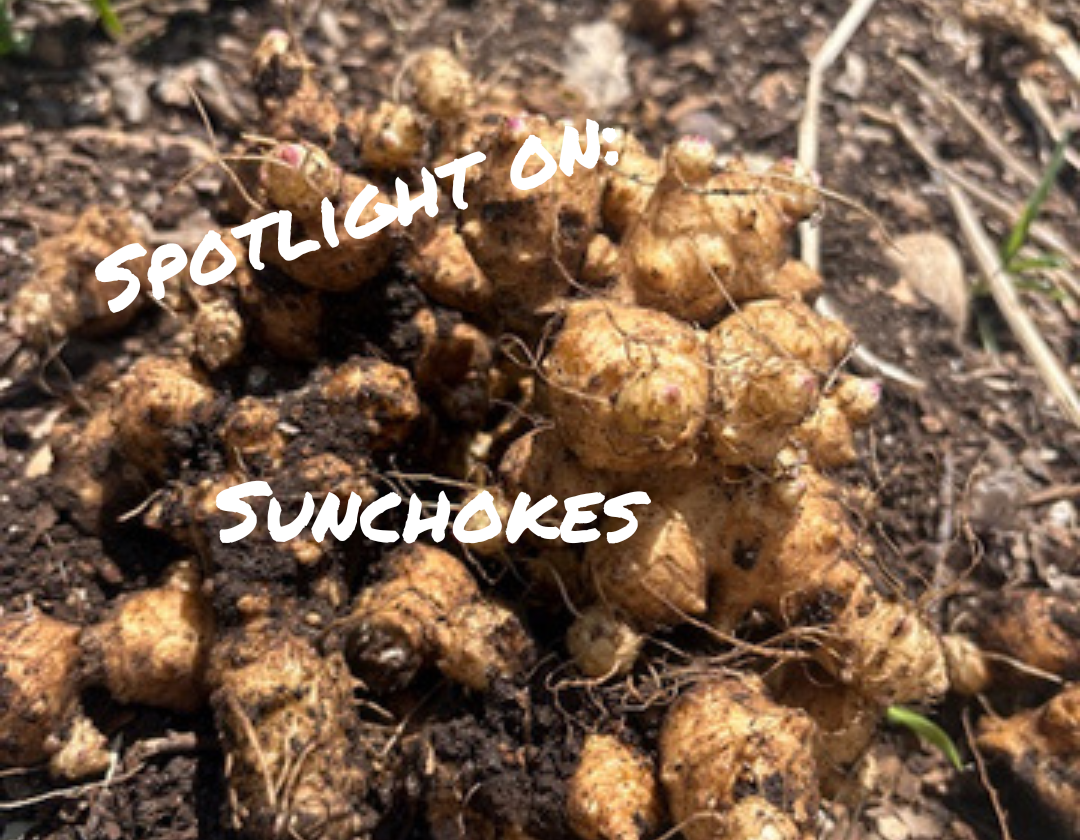
They look like ginger. They taste like potatoes. They grow like weeds. And somehow, almost nobody in Texas grows them.
Let’s fix that.
The plant I’m talking about is the humble sunchoke — also called the Jerusalem artichoke. Despite the name, it has absolutely nothing to do with Jerusalem and it isn’t really an artichoke either. But it is one of the easiest and most productive food crops you can grow.
If you’re interested in food security, low-effort gardening, or just really good ingredients that most people have never tried — this is one worth paying attention to.
Know it
Sunchokes are actually the underground tubers of a type of sunflower. Yes — sunflower. The same family as the big yellow flowers you see growing along the roadsides in the summer.
The plant itself can get 6–10 feet tall in the right conditions, and produces bright yellow flowers that look like small sunflowers late in the season. But the real prize is underground.
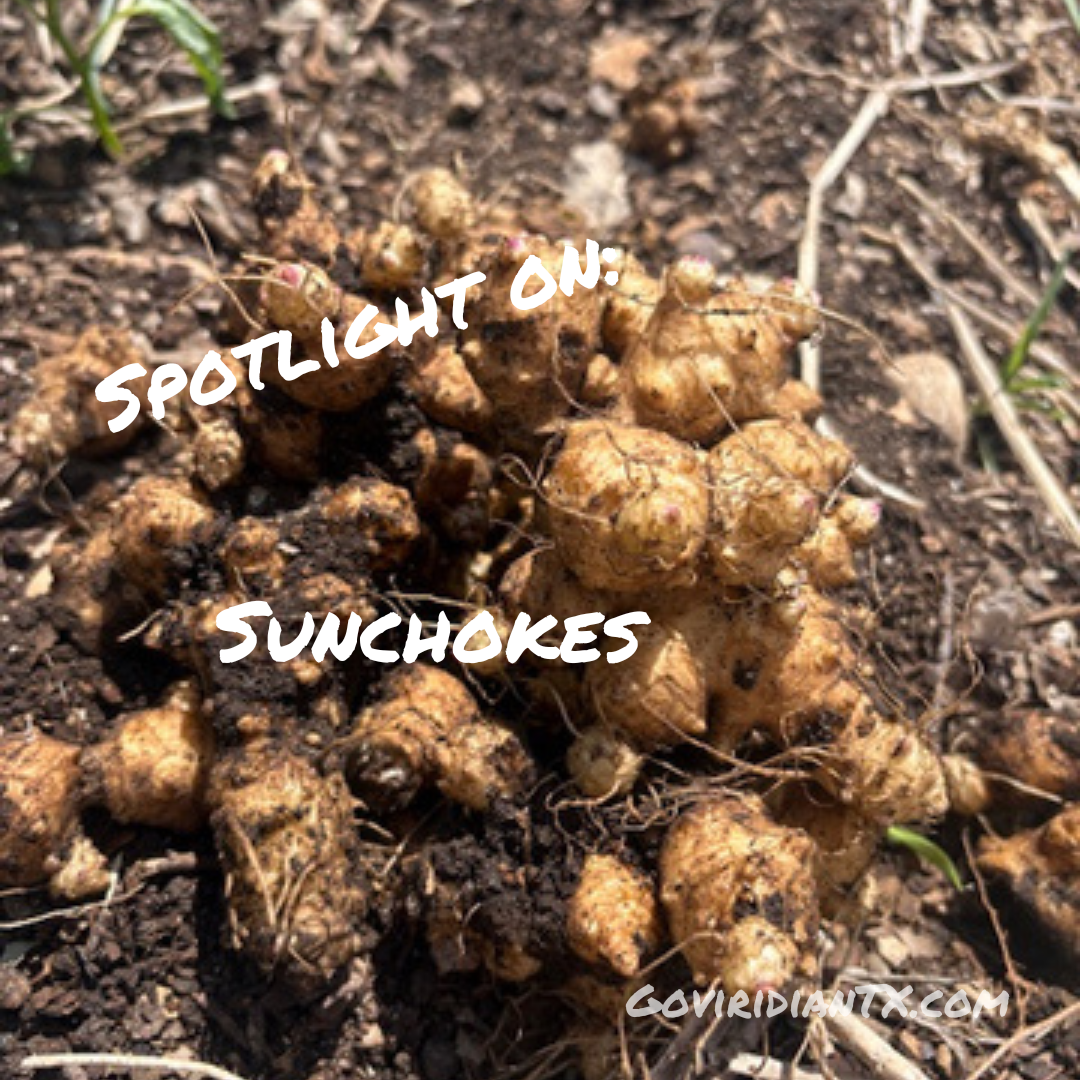
Instead of forming a single large root like a carrot, the plant makes clusters of knobby, irregular tubers that look a little like ginger root. Those tubers are edible, extremely nutritious, and surprisingly versatile in the kitchen.
Unlike potatoes, sunchokes don’t store starch in the same way. Instead, they store a type of carbohydrate called inulin. That means they’re naturally a little sweeter than potatoes and don’t spike blood sugar the same way traditional starchy vegetables can.
In other words: this is one of those old-school crops that was quietly doing “modern health food” things long before anyone started talking about them.
Meet it
“Okay, this sounds great. So where do I buy it?”
That’s the problem — you usually can’t.
Every once in a while you might see them at a farmers market or a high-end grocery store, usually labeled “Jerusalem artichokes.” When they do show up, they’re expensive — which is funny, because they’re one of the easiest things in the world to grow.
Most people have never tried them simply because they’re not a crop that works well in large-scale industrial farming. They don’t grow in neat, uniform shapes like potatoes, and they don’t all mature at exactly the same time.
But for a small grower, a backyard gardener, or someone trying to grow more of their own food? They’re almost perfect.
Grow it
If you live in Central or South Texas, this plant is about as low-maintenance as it gets.
Sunchokes are incredibly tough. They handle heat well, tolerate poor soil better than most vegetables, and once they’re established, they pretty much take care of themselves. In fact, the biggest problem most people have with them is not keeping them alive — it’s keeping them from spreading too much.
You plant the tubers just like you would potatoes: stick them in the ground in late winter or early spring, cover them with a little soil, and let them do their thing. By summer you’ll have tall sunflower-like plants, and by fall the tubers underground will be ready to harvest.
One of the things I like most about this plant is that it fits perfectly into a low-input garden. No heavy fertilizing. No constant watering. No babying the plants every day. Just plant them once and keep harvesting year after year.
For anyone trying to build a more resilient food system at home, this is exactly the kind of crop that makes sense.
Eat it
So what do they actually taste like?
Think somewhere between a potato, a water chestnut, and a very mild artichoke. They’re slightly sweet, a little nutty, and have a great texture whether you cook them or leave them raw.
You can roast them like potatoes, slice them thin and fry them into chips, shave them raw into salads, or puree them into soups. They also work really well in dishes where you want something starchy but a little lighter than potatoes.
One of my favorite ways to use them is simply roasting them hard until the edges get golden and crispy. A little olive oil, salt, and maybe some garlic — that’s it. Simple, but really good.
They’re also one of those ingredients that fits perfectly into the kind of food we should probably be eating more of anyway: locally grown, easy to produce, nutritious, and way more interesting than the standard grocery-store vegetables.
One of the biggest reasons sunchokes are getting attention again isn’t just that they’re easy to grow — it’s what’s actually inside them.
Unlike potatoes, which store starch, sunchokes store something called inulin, which is a type of soluble fiber. Your body doesn’t digest it the same way it digests starch. Instead, it feeds the beneficial bacteria in your gut — which is why you’ll often see it described as a prebiotic food.
That might sound trendy, but the research on it is actually pretty solid. Reviews published in nutrition and food-science journals consistently describe Jerusalem artichokes as one of the richest natural sources of inulin, and that fiber has been linked to:
- better digestive health
- improved gut microbiome balance
- more stable blood sugar levels
- improved mineral absorption (especially calcium)
- possible benefits for cholesterol and inflammation
Again, this isn’t a miracle vegetable — but it is one of those old crops that turns out to be way more useful than people realized.
There’s even research looking specifically at Jerusalem artichokes and gut health, where the compounds in the tubers helped increase beneficial gut bacteria and the production of short-chain fatty acids (which play a big role in digestion and overall gut health).
And if you like the idea of food that’s both nutritious and practical to grow, this plant checks both boxes. It’s native to North America, grows with very little effort, produces a lot of food per plant, and happens to be packed with fiber that most people don’t get nearly enough of.
Final thoughts
Sunchokes aren’t the flashiest looking vegetable in the world.
But they grow easily, produce a lot of food with very little effort, and taste great in the kitchen. That’s exactly the kind of plant that deserves more attention — especially here in Texas.
If you’re trying to grow more of your own food, experiment with new ingredients, or just want something different in your garden this year, this is a plant worth giving a shot.
Dig a little deeper:
- Jerusalem artichoke: nutritional composition and health benefits (review article – PubMed)
- Inulin: properties and health benefits (research review)
- Recent research on inulin from Jerusalem artichokes
- Cleveland Clinic: what inulin does for gut health
- Healthline: benefits of inulin fiber explained simply